Introduction
Food wastage is a global crisis with far-reaching economic, environmental, and social implications. According to the Food and Agriculture Organization of the United Nations (FAO), approximately one-third of all food produced for human consumption, valued at nearly $1 trillion, is lost or wasted annually. This wastage occurs throughout the entire supply chain, from production and processing to distribution and consumption. In recent years, hyper scalers, or cloud service providers, along with advancements in industrial automation, have emerged as pivotal players in the fight against food wastage. This article explores how these technologies and strategies are being leveraged to tackle this critical issue.
Tech@Levintutu is the technical team at @Levintutu who writes on the latest technology and its applications in industrial automation. To read more about us, visit our case studies at https://levintutu.com/case-study/.
The Scale of the Problem
Before delving into the solutions, it is crucial to understand the scale of the problem. The food supply chain is a complex web of interconnected processes, from farms and factories to distribution centers and retailers. At each stage, inefficiencies, spoilage, and mismanagement contribute to food loss. For instance, in developing countries, much of the wastage occurs during the early stages of production due to inadequate storage and transportation infrastructure. In developed nations, consumer behavior and retail practices are significant contributors to food waste.
Hyperscalers and Data Analytics
Hyperscalers, including industry giants like Amazon Web Services (AWS), Microsoft Azure, and Google Cloud Platform, have become integral in addressing food wastage through the power of data analytics. These companies provide massive computing power and storage capabilities, allowing them to process vast amounts of data in real time. By harnessing this computing power, stakeholders across the food supply chain can optimize operations, reduce waste, and make informed decisions.
One of the primary ways hyperscalers combat food wastage is through predictive analytics. By analyzing data related to factors like weather patterns, market demand, and transportation schedules, these platforms can forecast potential disruptions in the supply chain. This enables producers and distributors to adjust their operations proactively, minimizing the risk of excess inventory or shortages.
Furthermore, hyperscalers facilitate the implementation of Internet of Things (IoT) devices and sensors. These devices collect real-time data on temperature, humidity, and other critical variables, providing stakeholders with actionable insights into the conditions of perishable goods during transit and storage. In case of deviations from optimal conditions, automated alerts can be generated, allowing for immediate corrective action.
Industrial Automation and Robotics
Industrial automation, encompassing technologies such as robotics, Artificial Intelligence (AI), and Machine Learning (ML), plays a pivotal role in mitigating food wastage. Automation optimizes processes, reduces human error, and enhances overall efficiency within the food supply chain.
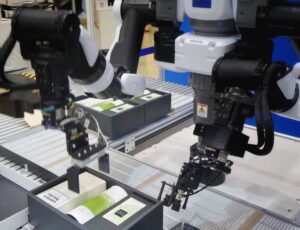
Automated sorting and packaging systems have proven to be particularly effective in reducing food wastage. High-speed cameras and AI algorithms can quickly identify and sort produce based on quality, size, and ripeness. This ensures that only the highest-quality products reach the market, while lower-grade items can be repurposed for other uses such as animal feed or compost.
In addition to sorting, robotics are being deployed in various stages of food production. For example, autonomous harvesting machines equipped with advanced vision systems can precisely pick ripe fruits and vegetables, minimizing damage and waste. Likewise, automated packaging lines increase throughput while reducing the likelihood of packaging errors.
Cold Chain Optimization
Maintaining a consistent and controlled temperature throughout the cold chain is crucial in preventing food spoilage. Hyperscalers and industrial automation technologies are instrumental in optimizing this critical aspect of the supply chain.
By leveraging IoT sensors and data analytics, stakeholders can monitor the temperature and humidity conditions of perishable goods in real time. Automated systems can then adjust settings, reroute shipments, or trigger alarms in case of deviations from the specified parameters. This level of control ensures that products remain within the optimal storage conditions, preserving their quality and extending their shelf life.
Collaboration and Knowledge Sharing
The battle against food wastage requires a collaborative approach. Hyperscalers and industrial automation providers are fostering partnerships with agricultural organizations, food processors, distributors, and retailers to share best practices and implement innovative solutions.
Furthermore, these technology providers are actively involved in knowledge-sharing initiatives, organizing seminars, webinars, and conferences to educate stakeholders about the latest advancements in combating food wastage. By fostering a culture of continuous learning and improvement, these efforts contribute to a more sustainable and efficient food supply chain.
To read more about industrial automation, visit our blog on Humanoid Robots: Bridging the Gap between Science Fiction and Reality
Conclusion
The convergence of hyperscalers and industrial automation technologies represents a significant leap forward in the global fight against food wastage. Through advanced data analytics, IoT integration, and robotics, these technologies empower stakeholders to make more informed decisions, optimize processes, and minimize waste throughout the food supply chain. However, it is imperative that these efforts continue to be supported by collaborative partnerships, knowledge sharing, and a collective commitment to sustainable practices. By harnessing the full potential of these technologies, we can pave the way toward a more efficient, resilient, and sustainable food system for generations to come.
This article provides an in-depth look at how Harnessing the Power of Hyperscalers and Industrial Automation to Combat Food Wastage is Revolutionizing Industrial Automation and the benefits it brings to various industries. Depending on your target audience, you might want to include specific case studies or examples of successful implementations in different sectors.
To stay updated with our latest innovations and explore how our AI-led automation can revolutionize your enterprise-wide processes, visit our website and follow us for exciting developments in the world of robotics and data analytics: https://levintutu.com/
And Follow us at https://www.linkedin.com/company/levintutu-automation/.